FEATURED MEDIA
About the project
Qaid is a psychological thriller about a man who finds himself trapped inside a repeating cycle, where memory, time and reality slowly begin collapsing into one another.
The film started with a fairly simple intention. I wanted to make something experimental, but I did not want the experiment to become more important than the story itself. I still wanted the film to be gripping and to create enough mystery that the audience would keep watching because they genuinely wanted to understand what was happening.
That became the foundation of Qaid.
The idea of repetition interested me because it allowed the same moment to mean different things depending on when the audience encountered it. Something that initially seemed ordinary could suddenly become unsettling once it returned for the second or third time.
A lot of the film grew out of that feeling of familiarity slowly becoming uncomfortable.
My role
I worked on Qaid across almost every major stage of the film.
I was the director, director of photography, editor, sound designer, music composer and graphic designer for the project.
That meant my involvement started while we were still developing the idea and continued all the way through the final cut.
While directing, I was also constantly thinking about how the film would be photographed. The framing, lighting and camera movement were closely connected to the way I wanted the audience to experience the story, so direction and cinematography never really felt like two separate jobs.
The same thing happened once we reached post-production.
Editing the film myself gave me control over the rhythm of the repetition. I could decide how long certain moments should remain on screen, where something should suddenly cut away and when a repeated action needed to feel identical or slightly different.
Sound became another major part of that process.
I designed the soundscape and composed the music while editing the film, which meant the image, sound and pacing could develop together rather than one being added after the other.
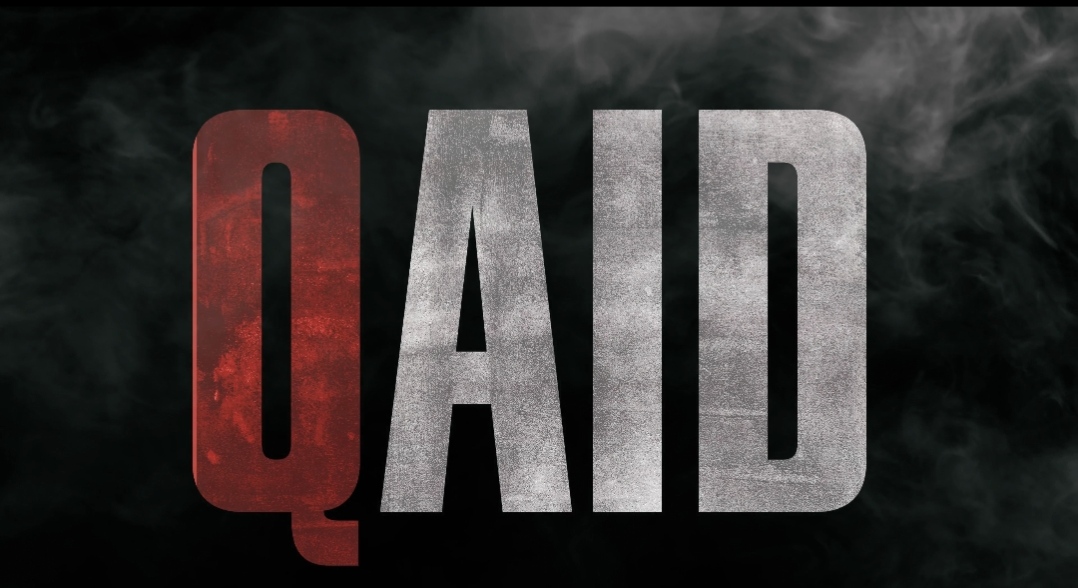
I also handled the graphic elements of the film, including the title and credit visuals.
Doing so many roles on one project was exhausting at times, but it also gave me a lot of creative control over how the final film felt.
Director’s note
Qaid started from a very simple intention: I wanted to make something experimental while still telling a story that could keep the audience engaged throughout.
The first thing that interested me was creating a sense of mystery and uncertainty.
I wanted the audience to keep questioning what they were seeing and slowly begin noticing patterns before the film fully explained them.
As we developed the screenplay, I realised that the film could not rely only on its central concept. The experience of watching it had to carry just as much weight.
That is where lighting, sound, editing and framing became extremely important.
I wanted all of those things to contribute to the storytelling rather than simply exist as technical parts of the production.
The challenge was making repetition feel deliberate.
If the audience sees the same situation more than once, the second version needs to give them something new. It could be a detail they missed earlier, a different emotional response or a small change that makes them question their understanding of the previous scene.
That became one of the main things I was thinking about throughout the film.
Building the visual and sonic language
Because the story takes place inside an increasingly unstable reality, I wanted the world around the protagonist to feel controlled but slightly uncomfortable.
Lighting became one of the biggest tools for creating that feeling.
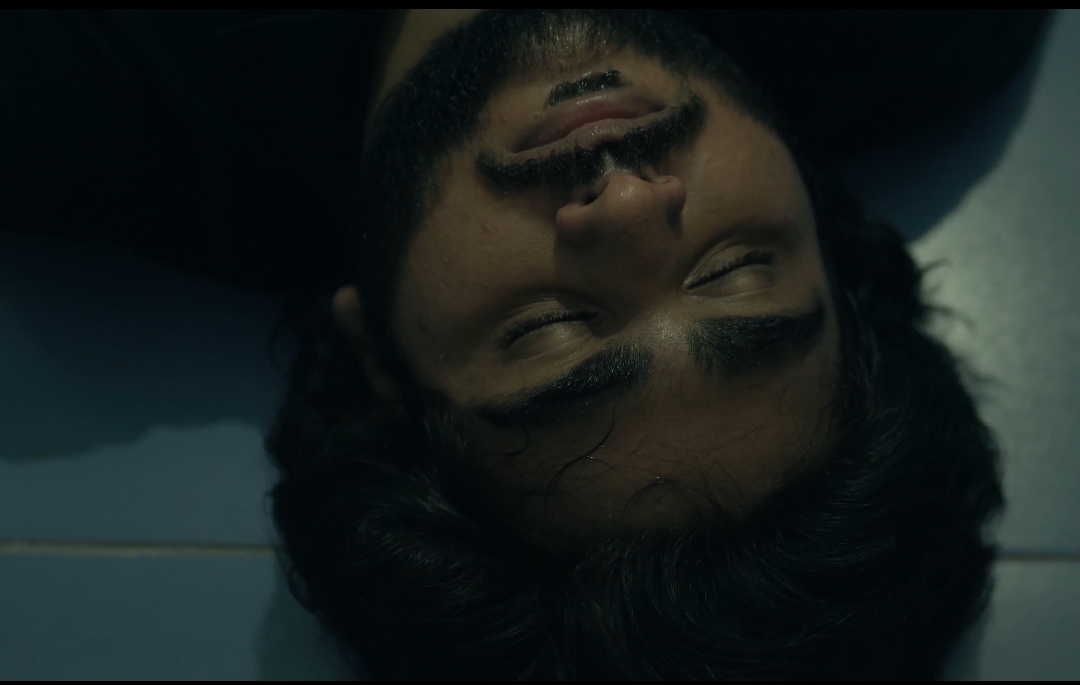
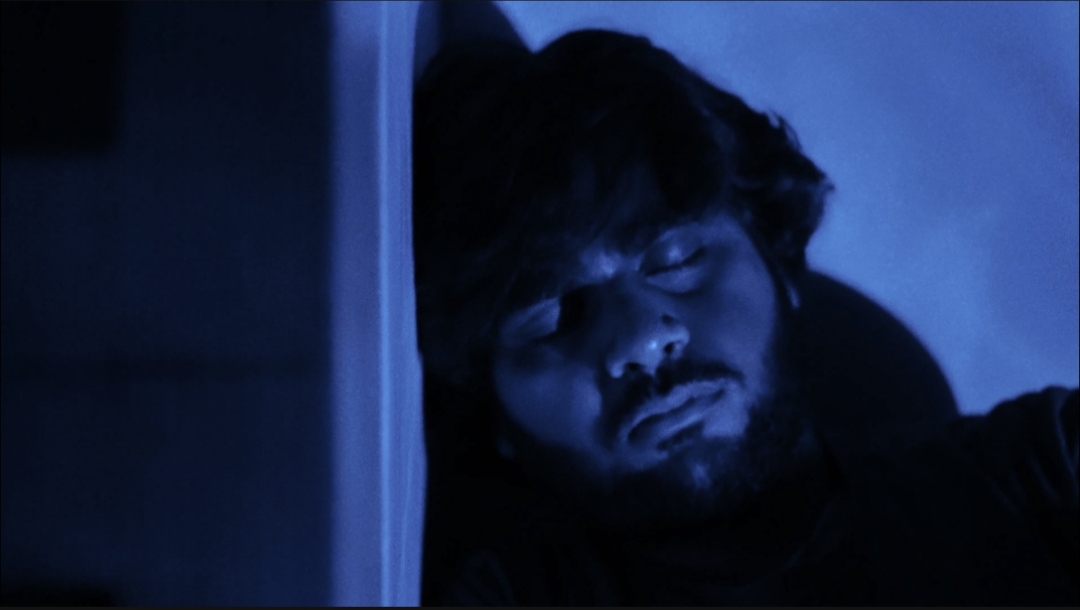
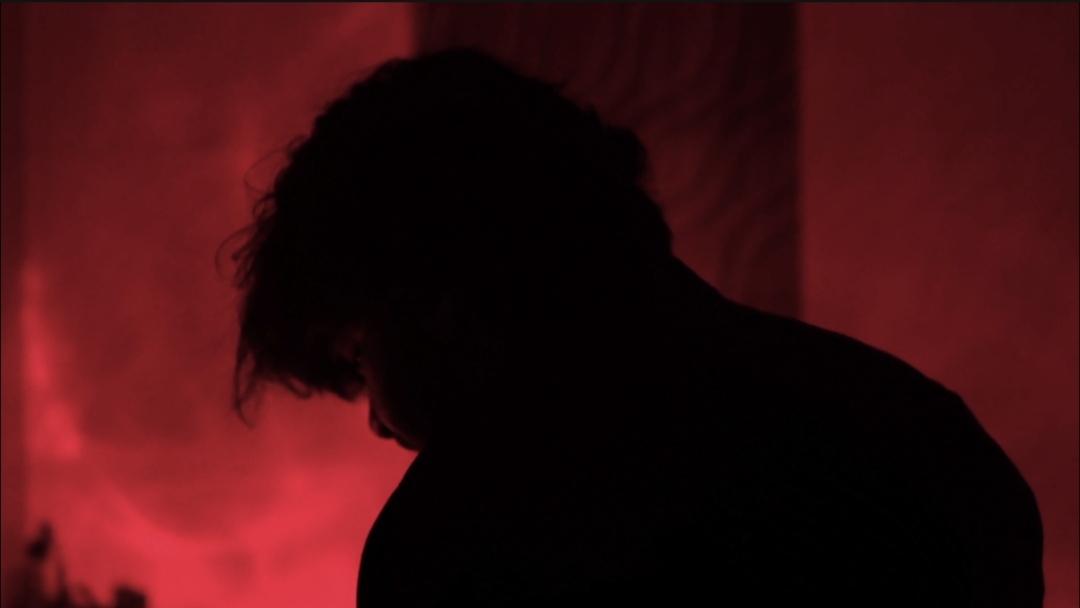
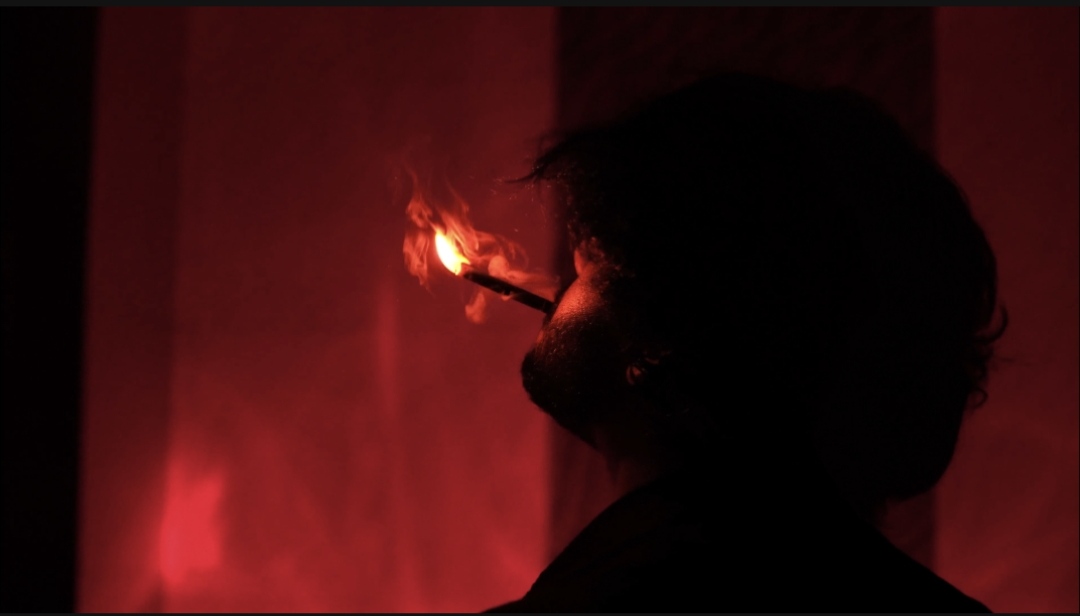
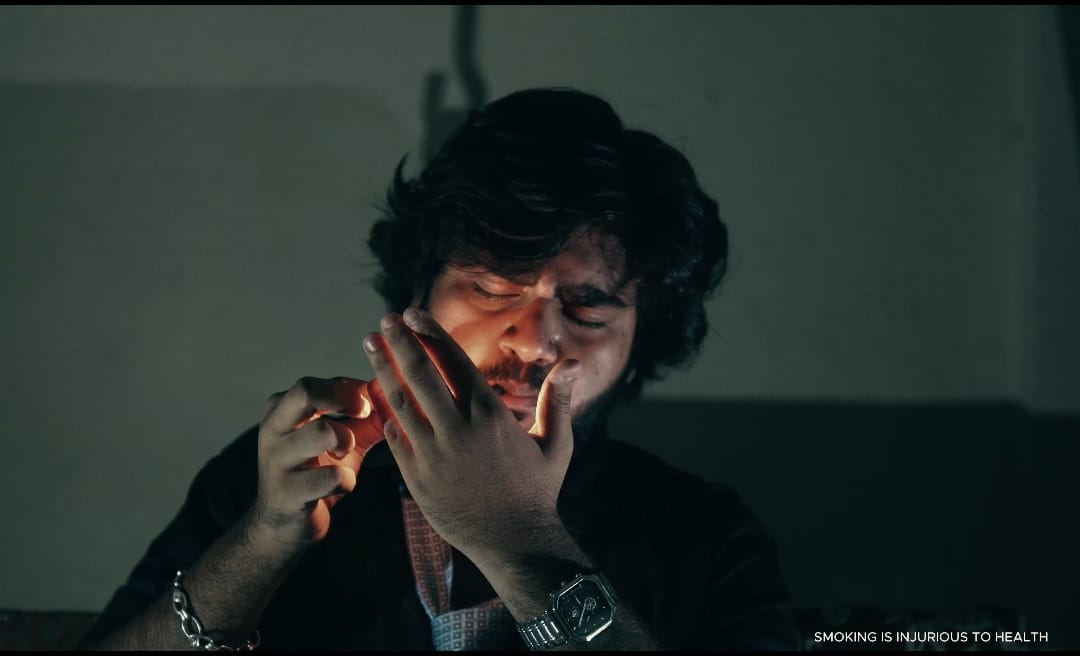
We used strong colours, shadows, silhouettes and darker areas of the frame to make the spaces feel less natural and more psychological.
Red and blue became especially important throughout the film.
I was not interested in using coloured lighting simply because it looked stylish. I wanted the colour to help create different emotional environments within the story.
Framing worked in a similar way.
There were moments where showing less information felt more effective than showing everything clearly. Tight compositions, negative space and silhouettes allowed us to hide parts of the environment and make the audience search the frame for information.
I kept returning to one question while shooting:
How little can we show while still giving the audience enough to follow the story?
Sound allowed us to push that uncertainty much further.
Instead of constantly filling scenes with music, I tried using ambience, silence and smaller sound details to create tension.
There are moments where the sound becomes more noticeable than the image and moments where removing sound entirely creates more discomfort than adding something dramatic would have.
Because I was also composing the music, I could build the score around the pacing of the edit instead of forcing the edit to follow a pre-existing track.
That helped the visual and sonic language of the film feel more connected.
Making Qaid
Making Qaid was considerably messier than the finished frames probably suggest.
The biggest problem was simply the lack of manpower.
We were shooting during the summer, and many people I knew who would normally help with a film had already gone back to their hometowns.
We especially needed people for lighting, props and general production work, but on many days we were operating with a very small crew.
Time was another challenge.
We eventually shot the film in two separate phases.
The first phase lasted for two nights, after which we had to stop production.
Almost a month later, we managed to resume the shoot and filmed the remaining portions over four consecutive nights.
Those nights were long.
We would often shoot for around 12 to 14 hours in a single night.
Having those long shooting hours gave us more time to work, but we were still constantly balancing what we wanted to shoot with the people, equipment, locations and budget we actually had.
There were plenty of moments where the plan had to change simply because executing the original version was no longer realistic.
Working around limitations
A few parts of the original screenplay were too ambitious for the resources we had.
Eventually, we had to stop asking:
How do we somehow shoot exactly what was written?
and start asking:
What is another way of telling the same part of the story?
That meant restructuring scenes, simplifying ideas and sometimes completely changing how a sequence worked.
At the time, some of those choices felt like compromises.
Looking back, I think a few of them actually improved the film.
Qaid taught me that limitations do not always weaken an idea. Sometimes they force you to understand what is actually important about a scene.
If you cannot rely on a large crew, expensive equipment or an elaborate setup, you have to find another solution.
And sometimes that solution ends up being more interesting than the original idea.
The people who made it possible
One of my favourite memories from Qaid has very little to do with a particular shot.
On the second day of production, almost nobody from our crew was available and we still had scenes that needed to be filmed.
I started calling a few friends I knew from theatre.
They showed up.
That became a recurring part of the production.
Different people would come in on different nights and help wherever they could.
Someone would handle the lights.
Someone would help with the camera.
Someone would manage props or things around the set.
Sometimes people would simply turn up because they wanted to support the film.
Because of that, Qaid never really felt like a film being made by one fixed crew.
It felt more like different people entering the project at different moments and helping keep it alive.
Looking back, that is probably one of my favourite parts of the entire experience.
Post-production
Post-production was where a lot of Qaid finally came together.
Because the film deals with repetition, editing became incredibly important.
A repeated moment could not simply be copied and shown again. The timing of the cut, the length of the shot and the information surrounding it all changed how the audience understood that repetition.
Editing the film myself meant I could experiment with those rhythms extensively.
Some sequences became shorter.
Some moments needed more breathing room.
Others worked better when the audience barely had enough time to process what they had just seen.
Sound design developed alongside the edit.
I spent a lot of time working with ambience, small sound details, silence and music to build tension without making everything overly dramatic.
The score followed the same approach.
I wanted the music to support the uneasiness of the film without constantly announcing that something unsettling was happening.
The graphic work was one of the final pieces.
The titles and credits needed to feel like they belonged to the same visual world as the film rather than feeling like something added after everything else was finished.
What I learned
Qaid taught me a lot about what happens when you have to think about a film as one connected system rather than a collection of separate departments.
Because I was directing, shooting, editing, designing the sound, composing the music and handling the graphic elements, decisions made during one stage constantly affected another.
A framing decision made during production could completely change the rhythm of the edit later.
A scene that felt slightly flat visually could become far more uncomfortable once the right sound was added.
Music could support the tension or completely ruin it if it made the emotion too obvious.
Working across all of those stages made me much more conscious of how closely image, sound, pacing and performance depend on one another.
It also taught me a lot about adaptability.
You can plan a film extensively and still arrive on set with fewer people than expected, less time than expected and a scene that suddenly cannot be shot the way you imagined it.
You still have to make the film.
I became much more comfortable with changing things on set, simplifying ideas, finding alternate visual solutions and treating constraints as problems to design around rather than reasons to stop.
Qaid was difficult to make, occasionally chaotic and definitely more ambitious than the resources we had.
But it was also one of those projects where I got to understand almost every part of the filmmaking process by actually doing it.